
Janitorial cleaning is the foundation of daily facility maintenance in commercial buildings. From offices and healthcare facilities to warehouses and retail spaces, professional janitorial services help businesses maintain a clean, safe, and productive environment through structured cleaning schedules, sanitation procedures, and ongoing facility upkeep.
Unlike one-time deep cleaning, janitorial cleaning is a continuous and preventive process that helps facilities maintain consistent cleanliness standards, support workplace safety, and ensure smooth day-to-day operations.
What is Janitorial Cleaning in Commercial Facilities?
Janitorial cleaning is the routine cleaning and maintenance of commercial buildings such as offices, schools, healthcare facilities, warehouses, and retail spaces. It includes recurring tasks like restroom cleaning, trash removal, floor care, dusting, and surface disinfection to maintain a clean, safe, and professional environment. Businesses often partner with professional janitorial services to implement structured cleaning programs that support workplace hygiene, safety, and operational efficiency.
What Makes Janitorial Cleaning Different from Regular Cleaning?
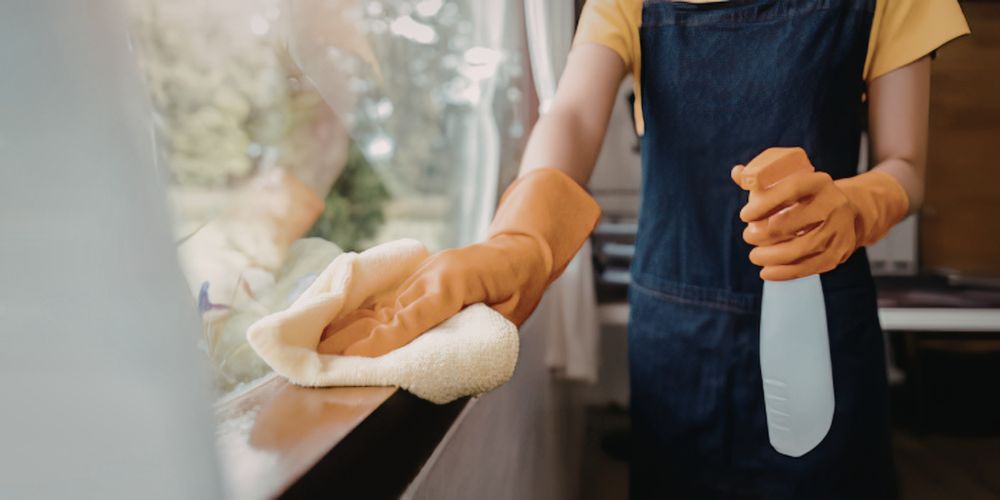
Janitorial cleaning is not random cleaning—it is a planned maintenance system for commercial spaces. It is built on:
- Fixed cleaning schedules (daily, weekly, monthly)
- Assigned cleaning zones inside buildings
- High-traffic priority cleaning
- Hygiene and safety standards
- Consistent operational routines
The Simple Difference Between Regular cleaning and Janitorial cleaning
Regular cleaning = removes visible dirt
Janitorial cleaning = maintains the entire facility continuously
Common Misconceptions About Janitorial Cleaning
Many businesses assume janitorial cleaning simply involves emptying trash bins and cleaning restrooms. In reality, a professional janitorial program is a structured maintenance system designed to support workplace hygiene, safety, appearance, and daily operations. Without a documented cleaning schedule and quality control process, facilities often experience inconsistent cleaning standards and recurring cleanliness issues.
How Janitorial Cleaning Works in Real Commercial Buildings
In professional environments, janitorial cleaning follows a structured operational system, not random tasks.
Step 1: Facility Division and Cleaning Zones in Commercial Spaces
The building is divided into specific zones, each assigned its own cleaning frequency based on foot traffic and usage:
- Reception & entrance
- Office workstations
- Restrooms
- Breakrooms
- Hallways
- Storage or warehouse areas
Step 2: Shift-Based Janitorial Cleaning Schedule
Most commercial facilities operate in shifts to ensure continuous cleanliness without disrupting business operations:
- Morning shift: Pre-opening cleaning (trash, floors, restrooms)
- Midday shift: Spot cleaning + restocking high-use items
- Evening/Night shift: Deep cleaning + full facility reset
Step 3: Efficient Cleaning Flow Pattern for Commercial Facilities
To optimize efficiency and maintain hygiene, cleaning always follows a logical, strategic flow:
- Start from low-traffic areas
- Move toward high-traffic zones
- End at entrances and exits
- Floors are always cleaned last to avoid re-soiling freshly cleaned surfaces.
How Professional Janitorial Cleaning Programs Are Developed
Before cleaning begins, most commercial facilities undergo an assessment to determine cleaning requirements. Factors such as building size, employee count, operating hours, and daily foot traffic help determine cleaning frequencies and task priorities.
In larger commercial facilities, cleaning frequencies are often adjusted based on occupancy levels, seasonal traffic patterns, and operational requirements to maintain consistent cleanliness standards.
A professional janitorial program typically includes:
- Facility walkthrough and assessment
- Identification of high-traffic and high-touch areas
- Cleaning frequency planning
- Customized task scheduling
- Ongoing quality inspections and adjustments
What Tasks Are Included in Professional Janitorial Cleaning?
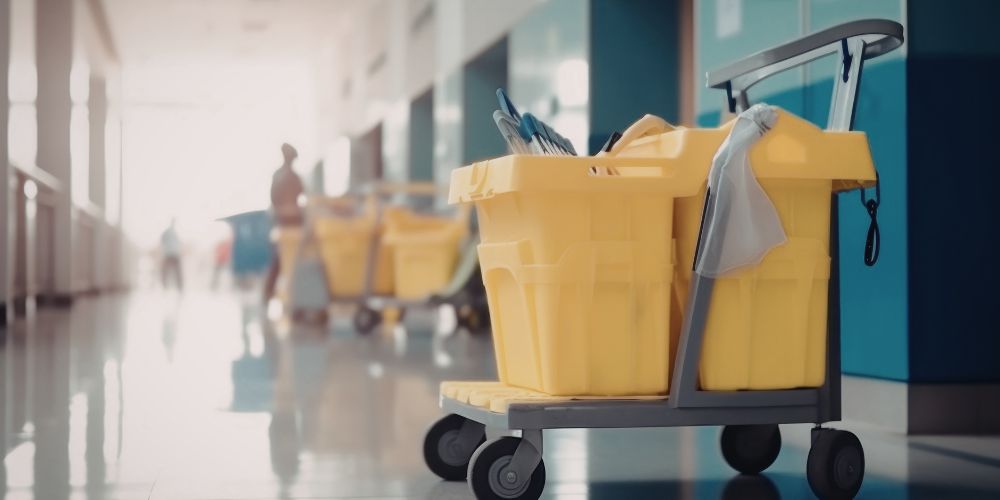
A standard janitorial contract covers everyday maintenance alongside scheduled support tasks. Many businesses use a detailed janitorial cleaning checklist to ensure cleaning tasks are completed consistently and according to schedule.
Core Daily Tasks in Commercial Janitorial Cleaning
- Restroom cleaning and sanitization
- Trash removal and liner replacement
- Vacuuming carpets and mats
- Sweeping and mopping hard floors
- Dusting workstations and communal furniture
- Disinfecting high-touch surfaces (doorknobs, elevator buttons)
Support & Optional Tasks in Janitorial Cleaning Services
- Supply restocking (soap, paper towels, toilet paper)
- Interior glass and window cleaning
- Light stain removal
- Breakroom and kitchen sanitation
Common Janitorial Cleaning Tasks Businesses Often Overlook
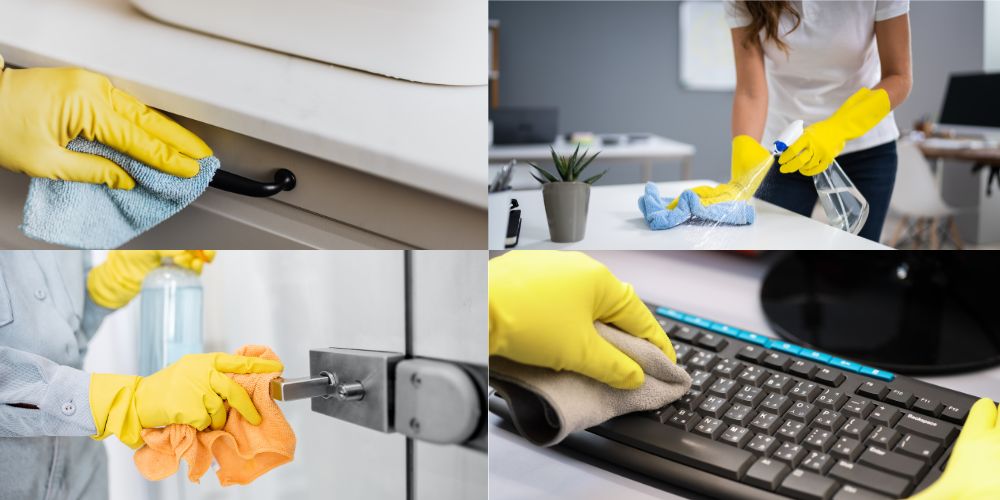
While routine tasks such as vacuuming and restroom cleaning receive the most attention, some commonly overlooked areas can significantly impact cleanliness and workplace hygiene.
Examples include:
- Door handles and push plates
- Light switches
- Shared office equipment
- Breakroom appliances
- Reception counters
- Elevator buttons
These high-touch surfaces often require more frequent disinfection than standard cleaning areas. Understanding which high-touch office areas require frequent cleaning can help reduce the spread of germs and improve workplace hygiene.
Key Differences Between Janitorial Cleaning and Commercial Cleaning
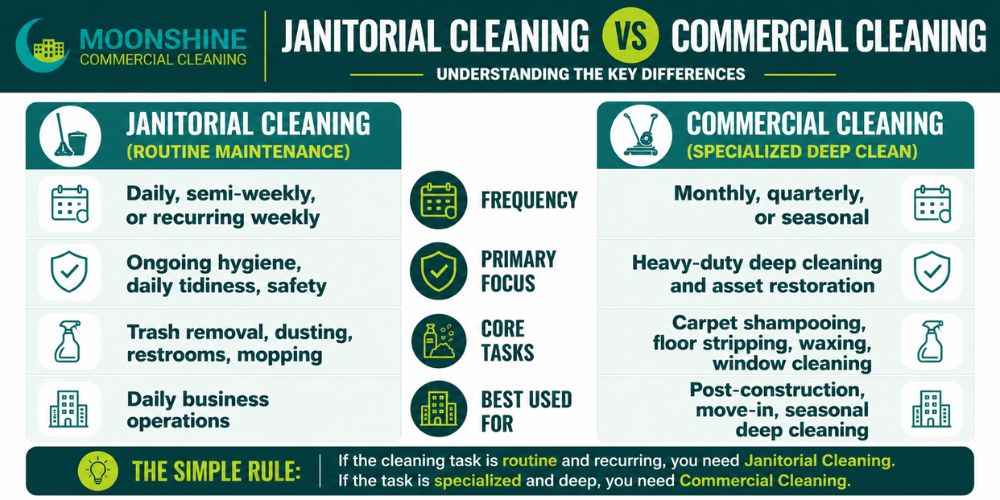
Janitorial cleaning focuses on routine daily maintenance such as trash removal, restroom cleaning, and floor care. Commercial cleaning includes deeper, specialized tasks like carpet shampooing, floor stripping, window cleaning, and post-construction cleaning.
Many businesses confuse these two terms, but they serve completely different operational needs.
| Feature / Service | Janitorial Cleaning (Routine Maintenance) | Commercial Cleaning (Specialized Deep Clean) |
| Frequency | Daily, semi-weekly, or recurring weekly | Monthly, quarterly, or seasonal |
| Primary Focus | Ongoing hygiene, daily tidiness, safety | Heavy-duty deep cleaning and asset restoration |
| Core Tasks | Trash removal, dusting, restrooms, mopping | Carpet shampooing, floor stripping, waxing |
| Best Used For | Daily business operations | Post-construction, move-in, seasonal cleaning |
Businesses often confuse these services because they address different cleaning needs. Learn more about the differences between janitorial cleaning vs commercial cleaning before choosing the right solution for your facility.
Simple Rule to Choose Janitorial vs Commercial Cleaning
If the cleaning task is routine and recurring, you need Janitorial Cleaning.
If the task is specialized and deep, you need Commercial Cleaning.
Full-Day Janitorial Cleaning Schedule for Offices and Facilities
To guarantee 24-hour cleanliness control, a professional janitorial rotation operates seamlessly across the workday:
| Time of Day | Shift Focus | Core Tasks Executed |
| 8:00 AM | Pre-Opening Reset | Empty overnight/early trash bins, fully sanitize restrooms, mop main entrance floors, and prep common areas for staff arrival. |
| 12:00 PM | Midday Maintenance | High-traffic restroom touch-ups, kitchen/breakroom wipe downs post-lunch, and immediate spill or spot cleaning in offices. |
| 6:00 PM | End-of-Day Reset | Full facility vacuuming, detailed desk and surface sanitization, complete floor mopping, and a final quality inspection. |
Real-World Examples of Janitorial Cleaning in Commercial Settings
Example 1: 50-Person Office Building
- Morning: Trash removal + restroom cleaning before staff arrives.
- Midday: Spot cleaning in reception + kitchen area post-lunch.
- Evening: Full vacuuming + desk sanitation + floor mopping.
- Result: The office stays immaculate all day without interrupting employee workflows.
Example 2: Hospital Facility
- Continuous restroom sanitization every few hours.
- High-touch surface disinfection multiple times daily.
- Strict separation protocols between clean and contaminated zones.
- Focus: Infection control and medical safety, not just appearance.
Example 3: Warehouse Facility
- Dust control in massive storage zones.
- Industrial floor sweeping in loading docks and areas.
- Immediate safety hazard removal (oil, debris, spills).
- Focus: Safety prevention and operational efficiency.
Common Problems Caused by Inadequate Janitorial Cleaning
When routine cleaning is inconsistent, facilities often experience:
- Increased employee complaints
- Restroom hygiene issues
- Faster floor deterioration
- Dust accumulation
- Negative visitor impressions
- Increased workplace safety risks
These problems often develop gradually and become noticeable only after workplace cleanliness standards begin to decline.
Why Janitorial Cleaning is Crucial for Workplace Hygiene and Safety
- Health Protection: Drastically reduces bacteria, viruses, dust, and allergens in shared environments, lowering employee sick days.
- Employee Productivity: Clean, organized environments improve mental focus, boost morale, and reduce workplace distractions.
- Customer Impression: A pristine facility builds instant trust, professionalism, and corporate credibility the moment a client walks in.
- Safety Control: Proactive maintenance prevents slip-and-fall hazards, blocked walkways, and costly workplace accidents.
- Asset Protection: Regular care extends the lifespan of expensive flooring, carpets, office furniture, and interior fixtures.
The Business Impact of a Clean Workplace
A clean workplace contributes to employee well-being, customer confidence, and overall facility performance. Workplace cleanliness affects how employees feel about their environment and how customers perceive a business. Consistent janitorial cleaning helps create a professional appearance, supports workplace productivity, and protects facility assets from premature wear and damage.
For many businesses, janitorial cleaning is not simply a cleaning expense—it is an investment in workplace operations, employee experience, and long-term facility maintenance. Consistent cleaning programs can also help reduce long-term maintenance costs by preventing excessive wear on flooring, furniture, and other facility assets.
Industries That Rely on Professional Janitorial Services
- Office buildings & corporate parks
- Healthcare & medical facilities
- Schools, colleges, and universities
- Warehouses, fulfillment centers, & logistics hubs
- Retail stores & shopping centers
- Property management & residential common areas
How to Tell if Your Facility Needs Janitorial Cleaning Services
If your business is currently experiencing any of the following issues, it is time to transition to a structured janitorial program:
- Restrooms are frequently untidy, smelly, or out of stock.
- Visible dust accumulation on desks, monitors, and fixtures.
- Overflowing trash bins in communal areas before the day ends.
- Complaints regarding cleanliness from employees, clients, or visitors.
- Inconsistent results from internal staff trying to clean up after themselves.
How Often Should Professional Janitorial Cleaning Be Scheduled?
Janitorial cleaning frequency depends on the type of facility, its size, and daily foot traffic. High-traffic environments require more frequent cleaning, while smaller or low-use spaces need less frequent service.
Most businesses follow a structured cleaning schedule based on usage levels.
Typical Janitorial Cleaning Frequencies by Facility Type
| Facility Type | Typical Janitorial Frequency |
| Small Office | Weekly |
| Medium Office | 2–3 Times Per Week |
| Corporate Office | Daily |
| Medical Facility | Daily or Multiple Times Daily |
| Retail Store | Daily |
| Warehouse | Daily or Several Times Weekly |
Daily Cleaning
Essential for high-traffic environments like corporate headquarters, retail stores, and medical clinics.
Multiple Times Per Week
Ideal for medium-sized offices or lower-traffic professional buildings.
Weekly Cleaning
Suitable for small offices, boutique workspaces, or shared commercial spaces with low daily footfall.
How to Choose the Best Professional Janitorial Cleaning Service Provider
Consistency matters far more than a one-time great performance. When vetting service providers, ensure they meet these standards:
- Proven experience specifically in commercial/industrial environments.
- A highly structured, written cleaning process and checklist system.
- Formally trained, vetted, and background-checked cleaning staff.
- An internal quality assurance/inspection system managed by supervisors.
- Flexible scheduling that accommodates your specific business hours.
- A transparent, line-item service scope contract (no hidden fees).
Businesses looking for comprehensive commercial cleaning services should evaluate providers based on experience, quality control systems, and service flexibility.
Janitorial Cleaning FAQs: Common Questions Answered
What does janitorial cleaning mean?
Janitorial cleaning means the routine, ongoing maintenance and cleaning of commercial buildings. It encompasses daily tasks like trash removal, restroom cleaning, floor care, and surface sanitization to keep a business premises safe, hygienic, and functional.
What is the difference between janitorial cleaning and commercial cleaning?
Janitorial cleaning refers to daily or weekly routine maintenance (like sweeping, emptying trash, and cleaning bathrooms). Commercial cleaning involves heavy-duty, specialized tasks performed less frequently (such as carpet steam cleaning, window washing, or tile stripping and waxing).
What does a janitorial cleaner do?
A janitorial cleaner executes everyday facility maintenance tasks. This includes vacuuming, mopping, dusting, cleaning toilets, replacing restroom supplies, emptying trash cans, and wiping down high-touch points like doorknobs and counters.
Why is janitorial cleaning important for a business?
It protects public health by reducing the spread of germs, enhances your brand image to visiting clients, minimizes workplace safety hazards like slips, and keeps employees happy and productive in a clean environment.
Conclusion: Benefits of Professional Janitorial Cleaning Services
Janitorial cleaning is more than a routine cleaning task—it is an essential part of maintaining a clean, safe, and productive commercial environment. A well-structured cleaning program helps businesses improve workplace hygiene, support employee well-being, and create a positive impression for customers and visitors.
Investing in professional janitorial services ensures consistent cleanliness standards, better facility upkeep, and long-term operational efficiency. From offices and healthcare facilities to warehouses and retail spaces, routine janitorial cleaning plays a vital role in daily business operations.
With over 10 years of experience, Moonshine Commercial Cleaning provides dependable professional janitorial services and commercial cleaning solutions tailored to the unique needs of commercial facilities throughout Idaho Falls and the surrounding areas.
