

A warehouse cleaning checklist helps teams keep floors, aisles, loading docks, work areas, and employee spaces clean and orderly. With forklifts, pallets, packaging materials, and constant foot traffic, debris and spills can build up quickly if cleaning is left to occasional cleanup.
A practical cleaning schedule separates tasks by frequency: daily cleaning handles routine debris and spills, weekly cleaning addresses accumulated dirt and buildup, and monthly cleaning covers deeper or less-frequent tasks.
Use the checklist below as a starting point, then adjust the frequency based on your warehouse’s size, traffic, operating hours, floor type, and cleaning needs.
Daily Warehouse Cleaning Checklist
Daily cleaning should focus on areas that are used frequently and can quickly accumulate debris, spills or waste.
| Warehouse Area | Daily Cleaning Tasks |
| Floors & Aisles | Sweep, remove debris, and clear walkways |
| Loading Docks | Sweep, remove packaging, and clean spills |
| Packing & Work Areas | Remove waste and wipe surfaces |
| Restrooms | Clean, sanitize, and restock |
| Break Rooms | Wipe surfaces, clean floors, and empty bins |
| Waste & Recycling | Empty bins and remove loose waste |
| Entrances | Remove dirt and clean mats |
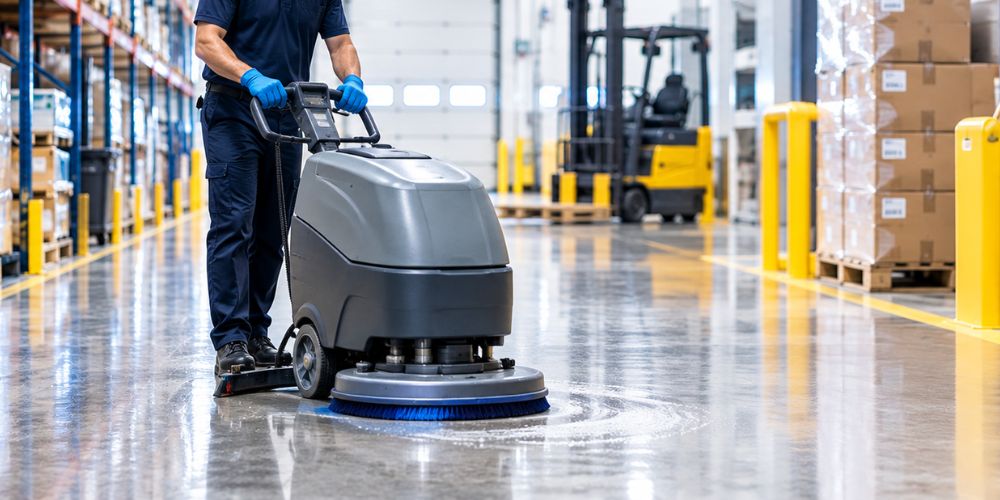
Floors and Aisles
Warehouse floors and aisles collect dust, cardboard, shrink wrap, plastic banding, pallet debris, and other materials throughout the day.
Daily floor cleaning should include:
- Sweeping or dust-mopping active floor areas.
- Removing loose packaging and pallet debris.
- Keeping pedestrian walkways clear.
- Cleaning visible spills promptly.
- Removing debris around accessible rack bases.
- Checking high-traffic areas for accumulated dirt.
Keeping warehouse floors and aisles free of loose debris, spills, and obstructions supports both housekeeping and workplace safety. OSHA’s warehousing hazards and solutions guidance addresses warehouse safety concerns including slips, trips, and falls, material handling, storage areas, and loading docks.
Loading Docks
Loading and receiving areas can collect packaging materials, dirt tracked in from outside, and debris from pallets.
Daily dock cleaning may include:
- Sweeping dock floors.
- Removing cardboard and shrink wrap.
- Collecting loose pallet debris.
- Cleaning visible spills.
- Removing tracked-in dirt and moisture.
- Keeping access routes clear.
Busy loading docks may need to be checked more than once per shift, particularly after periods of heavy loading and unloading activity.
Packing and Work Areas
Packing stations can produce a large amount of waste during normal operations.
Daily cleaning should include:
- Removing cardboard and plastic.
- Collecting tape and packaging materials.
- Emptying nearby waste containers.
- Wiping work surfaces.
- Removing visible residue.
- Keeping surrounding floors clear.
At the end of each shift, packing areas should be left free of loose packaging, waste, and materials that could interfere with the next shift’s work.
Restrooms and Break Rooms
Employee areas should also be part of the daily cleaning routine.
For restrooms, clean fixtures, sinks, counters, and floors; wipe frequently touched surfaces, remove waste, and replenish soap and paper products.
For break rooms, wipe tables and counters, clean visible food spills, empty trash, and clean the floor. Shared surfaces and frequently touched areas should also be cleaned according to the facility’s procedures.
Waste and Recycling Areas
Waste should be removed regularly rather than allowed to overflow.
Daily tasks include:
- Emptying waste and recycling containers.
- Removing loose cardboard and packaging.
- Cleaning visible debris around containers.
- Replacing liners where needed.
- Addressing spills or residue.
Entrances
Entrances can bring dirt and moisture into the facility throughout the day.
Daily entrance cleaning may include sweeping floors, cleaning mats, removing tracked-in dirt or water, and wiping doors and handles.
During rainy or wet weather, entrances may require additional checks to control tracked-in moisture and reduce slip hazards.
Weekly Warehouse Cleaning Checklist
Weekly cleaning should go beyond the quick housekeeping required each day. It focuses on areas where dirt, dust, and residue gradually accumulate.
| Warehouse Area | Weekly Cleaning Tasks |
| Warehouse Floors | Machine-scrub and detail edges |
| Racking & Storage | Dust accessible surfaces and rack bases |
| Loading Docks | Detail floors, corners, and dock areas |
| Packing Areas | Detail workstations and remove buildup |
| Restrooms | Detail fixtures, doors, and floor edges |
| Break Rooms | Detail surfaces, appliances, and floors |
| Warehouse Offices | Dust surfaces and clean floors |
| Waste Areas | Clean containers and surrounding areas |
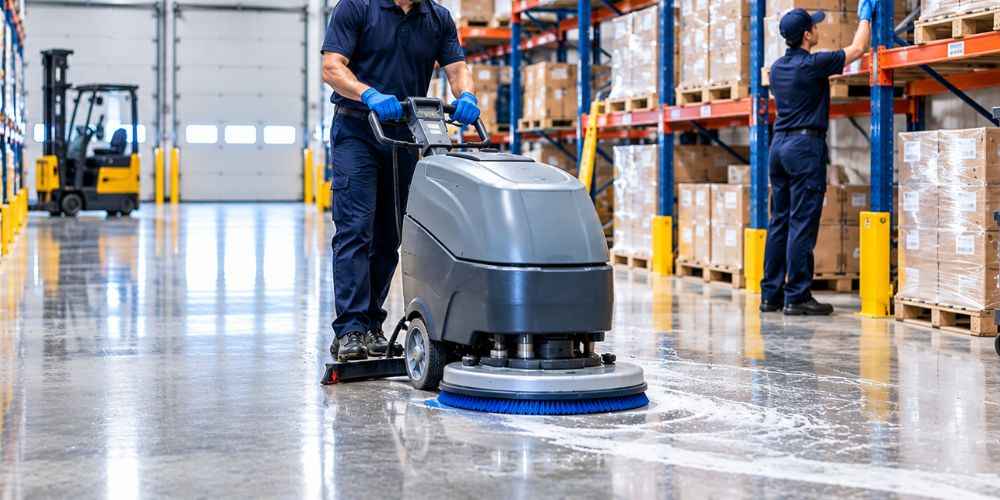
Floor Detail Cleaning
Sweeping removes loose debris, but it does not remove every mark or buildup from a busy warehouse floor.
Weekly floor care can include:
- Machine-scrubbing high-traffic areas.
- Cleaning floor edges and corners.
- Removing accumulated residue.
- Detailing areas around columns and rack bases.
- Cleaning sections that are difficult to reach during routine sweeping.
The appropriate cleaning method will depend on the floor material and the type of buildup present.
Racking and Storage Areas
Racking and storage areas can gradually collect dust and debris, particularly around accessible horizontal surfaces and rack bases.
Weekly cleaning may include:
- Dusting accessible rack surfaces.
- Cleaning appropriate rack uprights.
- Removing debris around rack bases.
- Clearing loose packaging from storage areas.
- Cleaning accessible floor-level areas.
High-level racking should only be cleaned using appropriate equipment and procedures. Employees should not climb racks or pallets to reach elevated surfaces.
Loading Dock Detail Cleaning
The weekly routine can provide more detailed attention to loading areas.
This may include:
- Cleaning dock floors and corners.
- Detailing accessible dock doors and tracks.
- Removing accumulated dirt around staging areas.
- Cleaning appropriate dock surfaces.
- Detailing areas around receiving and shipping zones.
Any cleaning around powered equipment or operational loading areas should follow the facility’s safety procedures.
Packing Areas
Weekly cleaning can target residue and buildup that daily housekeeping does not completely remove.
Tasks may include:
- Cleaning underneath and around workstations
- Removing accumulated adhesive/tape residue
- Cleaning equipment exteriors where appropriate
- Dusting shelves and accessible surfaces
- Cleaning difficult-to-reach floor areas
- Detailing waste collection areas
Restrooms, Break Rooms and Offices
Weekly cleaning provides an opportunity for more detailed attention to employee and administrative areas.
- Clean restroom partitions and doors.
- Detail floor edges and corners.
- Clean break-room appliance exteriors.
- Deep-clean counters and tables.
- Dust office furniture and accessible surfaces.
- Clean office floors and corners.
Monthly Warehouse Cleaning Checklist
Monthly cleaning should focus on tasks that do not need to be performed every day or every week but still need regular attention.
| Warehouse Area | Monthly Cleaning Tasks |
| Warehouse Floors | Deep-clean and remove stubborn buildup |
| High-Level Areas | Clean accessible elevated surfaces |
| Racking | Detail higher accessible surfaces |
| Walls & Doors | Remove marks, dust & buildup |
| Loading Areas | Perform deeper dock cleaning |
| Vents & Fixtures | Clean accessible surfaces |
| Less-Used Areas | Detail periodic cleaning areas |
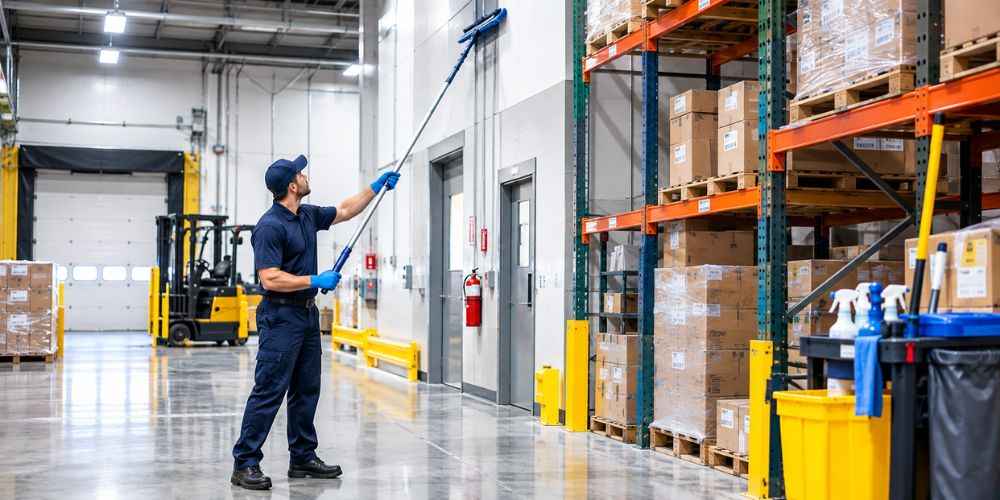
Deep Warehouse Floor Cleaning
Monthly floor care can address buildup that remains after routine sweeping and weekly maintenance.
Depending on the facility, this may include:
- Deep-cleaning larger floor sections.
- Detailing corners and floor edges.
- Removing stubborn residue.
- Cleaning accessible areas beneath shelving.
- Giving additional attention to heavy-traffic routes.
Monthly cleaning does not necessarily mean every warehouse floor needs a full deep clean once every month. High-traffic facilities may need deeper floor care more frequently, while lightly used areas may need it less often.
High-Level and Less-Accessible Areas
Dust can accumulate on elevated and less-accessible surfaces even when the main warehouse floor looks clean.
Periodic cleaning may include:
- High-level ledges.
- Accessible beam surfaces.
- Lighting fixtures.
- Ventilation grilles.
- Upper surfaces.
High-level cleaning should be assigned to trained personnel and performed with appropriate access equipment and safety procedures. Never use forklifts, pallets, racks, or makeshift platforms as improvised access equipment.
Walls, Doors and Fixtures
Walls and doors generally do not require daily cleaning, but visible dust, marks and buildup can accumulate over time.
Monthly cleaning may include:
- Spot-cleaning warehouse walls.
- Removing visible scuff marks.
- Cleaning doors and frames.
- Detailing accessible fixtures.
- Cleaning appropriate signage.
Loading and Entrance Areas
Monthly or periodic cleaning should focus on accumulated dirt and debris that routine sweeping does not remove, particularly around dock edges, entrance thresholds, corners, staging areas, and other areas exposed to heavy outdoor traffic. Depending on the facility, this may include detailed dock cleaning, deeper entrance cleaning, and removing accumulated debris around access points.
Warehouse Cleaning Tasks to Address Immediately
Not every warehouse cleaning task should wait for the next scheduled cleaning round. Conditions that create a slip, trip, obstruction, contamination, or other workplace hazard should be addressed as soon as they are identified.
Cleaning staff and warehouse employees should promptly report or address applicable conditions such as:
- Liquid spills or leaks on floors.
- Loose shrink wrap, plastic banding, tape, or packaging materials in active areas.
- Broken pallet pieces, splinters, or other loose debris.
- Cardboard, boxes, or packaging materials blocking aisles or walkways.
- Tracked-in water, mud, or other moisture at entrances.
- Overflowing waste or recycling containers.
- Debris that could interfere with forklifts, pallet jacks, or pedestrian movement.
- Debris or materials creating an obstruction around loading, receiving, or staging areas.
How Often Should a Warehouse Be Cleaned?
Most warehouses need daily cleaning and housekeeping, while high-traffic areas may require checks and cleanup several times during a shift. Weekly cleaning can address accumulated dirt and buildup, while monthly or periodic cleaning can cover deeper and less-frequent tasks.
The right schedule depends on how quickly each area becomes dirty, the type of work performed, and the level of traffic and material handling in the facility.
| Frequency | Typical Cleaning Focus |
| Several times per shift | Spills, obstructions, high-traffic areas, loading activity, and areas where debris accumulates quickly |
| Daily | Floors, aisles, loading docks, packing areas, restrooms, break rooms, entrances, and waste areas |
| Weekly | Floor scrubbing, rack bases, detailed work areas, dock areas, and accumulated dirt or residue |
| Monthly or periodically | Deeper floor cleaning, elevated accessible surfaces, walls, doors, fixtures, and less-used areas |
| Immediately, as needed | Spills, leaks, obstructions, hazardous conditions, overflowing waste, and debris that creates a safety or operational concern |
How to Set the Right Warehouse Cleaning Frequency
Not every warehouse needs the same cleaning schedule. Adjust the frequency based on:
- Warehouse size and traffic.
- Number of operating shifts.
- Forklift and loading activity.
- Amount of packaging waste and debris.
- Frequency of spills.
- Floor type and condition.
- Seasonal weather and tracked-in dirt.
For larger or busier facilities, divide the warehouse into cleaning zones and assign specific tasks to responsible staff or cleaning teams as part of a structured janitorial cleaning program. A janitorial cleaning checklist can also help organize recurring tasks, responsibilities, and completion tracking. Review the schedule regularly and increase the cleaning frequency if an area becomes dirty or obstructed before its next scheduled cleaning.
The goal is to maintain a clean, orderly warehouse rather than follow a fixed schedule that does not match actual conditions.
Frequently Asked Questions About Warehouse Cleaning
1. How often should a warehouse be cleaned?
Most warehouses should be cleaned daily, with high-traffic areas checked several times per shift. Deep cleaning can be done weekly, monthly, or as needed.
2. What should be included in a warehouse cleaning checklist?
A warehouse cleaning checklist should cover floors, aisles, loading docks, work areas, restrooms, break rooms, waste areas, entrances, and storage areas.
3. How do you keep warehouse floors clean?
Sweep or dust-mop floors regularly, remove debris, clean spills promptly, and machine-scrub high-traffic areas as needed.
4. How do you clean warehouse racks safely?
Clean accessible rack surfaces and bases with appropriate equipment. High-level areas should only be cleaned by trained personnel using proper access equipment.
5. What warehouse cleaning tasks should be done immediately?
Clean spills, remove obstructions, clear loose packaging, address leaks, and remove debris that could create safety or operational hazards.
Conclusion
A well-planned warehouse cleaning checklist makes it easier to stay on top of everyday debris, buildup, and less-frequent cleaning needs. By separating tasks into daily, weekly, and monthly routines, warehouse teams can keep cleaning manageable and make sure important areas are not overlooked.
Every warehouse has different cleaning requirements based on its size, traffic, and operations. For businesses that need professional support, Moonshine Commercial Cleaning provides a full range of commercial cleaning services tailored to different types of facilities and cleaning needs. Whether your business needs routine janitorial cleaning, floor care, window cleaning, or other commercial cleaning services, our team can help create a cleaning routine that works for your facility and schedule.
