
Cleaning removes dirt and some germs. Sanitizing lowers the number of germs on a surface to a safe level. Disinfecting kills specified germs when the product label’s directions are followed. Most businesses need routine cleaning every day, and add sanitizing or disinfecting for food-contact surfaces, illness incidents, or regulated settings.
The right mix depends on the surface, how often it’s touched, and any rules that apply to your facility. Here is how to decide.
What Is the Difference Between Cleaning, Sanitizing, and Disinfecting?
Cleaning, sanitizing, and disinfecting all contribute to surface hygiene, but they do not accomplish the same thing.
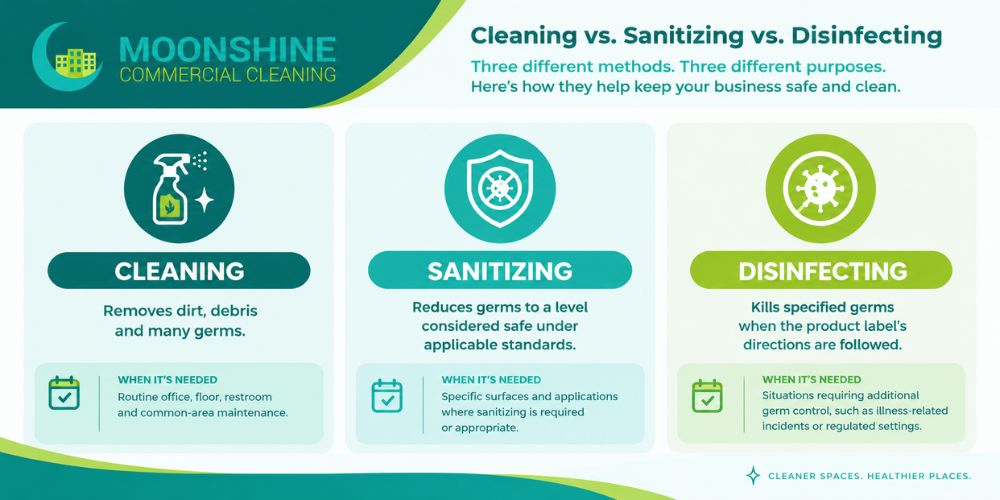
- Cleaning removes dirt, dust, grime, and organic matter from surfaces. It also removes many germs without necessarily killing them.
- Sanitizing reduces germs on a suface to a level considered safe under the applicable standards or product directions.
- Disinfecting uses an appropriate chemical product to kill specified germs on surfaces when used according to its label instructions.
According to the U.S. Environmental Protection Agency (EPA), sanitizers and disinfectants are subject to different effectiveness requirements. A product labeled for sanitizing should not automatically be assumed to provide the same protection as one registered for disinfection.
| Method | Main purpose | When a business might need it |
| Cleaning | Removes dirt, debris, and many germs | Routine office, floor, restroom, and common-area maintenance |
| Sanitizing | Reduces germs to an appropriate level | Specific surfaces and applications where sanitizing is required or appropriate |
| Disinfecting | Kills specified germs on surfaces | Situations requiring additional germ control, such as certain illness-related incidents |
The key takeaway: Cleaning is the foundation. Sanitizing and disinfecting provide additional, different levels of germ control when the situation calls for them.
What Does Cleaning Actually Do?
Cleaning is the first step in maintaining a commercial facility. It removes the visible buildup that develops as employees, customers, and visitors move through the building.
Dust settles on furniture, dirt enters through doorways, fingerprints accumulate on glass, and residue builds up on frequently used surfaces. If these areas are not maintained, the facility can quickly become difficult to manage.
Routine cleaning helps remove this buildup while reducing the number of germs present on surfaces.
Where Is Routine Cleaning Important?
Most businesses need regular cleaning throughout their facilities, including:
- Office workspaces: Desks, tables, floors, and shared work surfaces.
- Reception areas: Counters, seating areas, entryways, and glass doors.
- Restrooms: Sinks, toilets, mirrors, floors, and surrounding surfaces.
- Breakrooms: Countertops, tables, cabinet handles, and other frequently used areas.
- Common areas: Hallways, conference rooms, stair rails, and shared equipment.
The appropriate frequency depends on factors such as foot traffic, visible soil, surface use, and the nature of the business.
For example, a busy reception area may require attention several times throughout the day, while a lightly used meeting room may need less frequent cleaning between scheduled uses.
Why Cleaning Must Come First
One common mistake is assuming that spraying disinfectant over a dirty surface is enough.
Dirt and organic matter can interfere with the effectiveness of sanitizing and disinfecting products. The CDC’s facility cleaning guidance recommends cleaning surfaces before sanitizing or disinfecting them.
For businesses, this means removing visible soil first and then applying an additional treatment when appropriate.
To make sure routine tasks are covered consistently, use this janitorial cleaning checklist to identify the areas that need regular attention.
When Does Sanitizing Make Sense for a Business?
Sanitizing focuses on reducing germs to an appropriate level rather than simply removing dirt.
It is particularly relevant when a specific surface, activity, or applicable standard calls for sanitizing. However, it is not automatically necessary on every surface in every commercial building.
The correct approach depends on the intended use of the surface and the product’s approved directions.
Where Might Sanitizing Be Appropriate?
Examples may include:
- Designated food-contact surfaces when sanitizing is required.
- Certain shared surfaces where a suitable sanitizing product is appropriate.
- Specific work areas governed by applicable hygiene or industry requirements.
Food preparation and food-service environments may have additional requirements for cleaning and sanitizing food-contact surfaces. Businesses should follow the FDA Food Code page rather than relying on a general office cleaning procedure.
Does Sanitizing Replace Cleaning?
No. Sanitizing does not eliminate the need to remove dirt and residue first.
Consider a shared breakroom table. Wiping away crumbs and grease removes visible soil. If the surface requires sanitizing, the appropriate product must then be used according to its directions.
It is also important to understand the product’s limitations. A sanitizer is not necessarily effective against viruses, and its claims should not be confused with those of a registered disinfectant.
When Should a Business Disinfect Surfaces?
Disinfecting is intended to kill specified germs that remain on surfaces after cleaning. It can provide an additional layer of protection when the circumstances justify it.
However, using disinfectant everywhere, all the time, is not automatically the best strategy. Businesses should consider the type of facility, the people using the space, the surfaces involved, and any relevant public health or industry guidance.
Situations That May Call for Disinfection
Additional disinfection may be appropriate when:
- Someone has been visibly ill in a particular area.
- Frequently touched surfaces need additional treatment based on the circumstances.
- Public health authorities recommend specific measures during an outbreak.
- A facility’s applicable regulations or operating procedures require disinfection.
The CDC recommends regularly cleaning high-touch surfaces and disinfecting areas where people have obviously been ill. Its general guidance is intended for community facilities such as offices and businesses, not healthcare environments or other facilities with specialized requirements.
Which Surfaces Should Receive Extra Attention?
Depending on the facility and its cleaning plan, frequently touched surfaces may include:
- Door handles and push plates.
- Light switches and elevator buttons.
- Shared keyboards, touchscreens, and office equipment.
- Reception counters and shared tables.
- Restroom fixtures and commonly touched handles.
The goal is to prioritize surfaces based on actual use and risk rather than applying the same treatment to every object in the building.
Businesses can also review the common areas covered by professional janitorial cleaning to identify frequently used surfaces that may need more regular attention.
Why Disinfectant Contact Time Matters
Applying a disinfectant and immediately wiping it away may prevent the product from working as intended.
Many disinfectants require the treated surface to remain visibly wet for a specified period. This is known as the contact time, and it is stated on the EPA’s pesticide labels page.
For safe and effective use:
- Clean the surface first.
- Choose a product approved for the intended surface and use.
- Follow the label’s application and dilution instructions.
- Keep the surface wet for the required contact time.
- Follow the stated precautions for ventilation, protective equipment, and storage.
Never mix cleaning chemicals, and do not assume that one product works against every type of germ. Always follow the manufacturer’s directions and applicable OSHA’s Hazard Communication page.
Which Cleaning Method Is Right for Different Business Areas?
There is no single cleaning method that fits every area of a commercial property. A practical plan considers how each space is used, what types of surfaces it contains, and whether any additional hygiene requirements apply.
Here are examples of how businesses can approach different areas.
Offices and Workstations
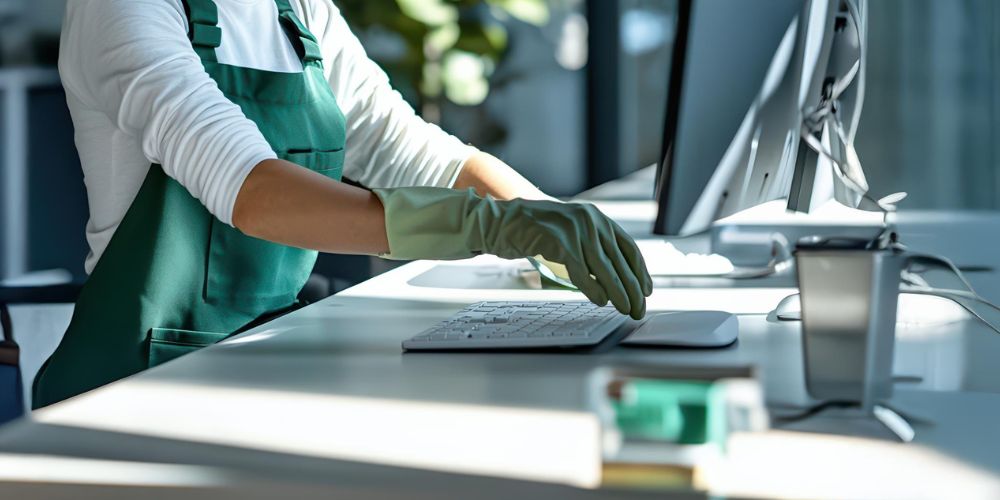
Desks, conference tables, shared equipment, and other work surfaces need routine cleaning to remove dust, fingerprints, and everyday residue.
Frequently touched items may need more frequent attention. Additional disinfection can be considered when the circumstances warrant it, such as after an illness-related incident.
Electronic equipment should be cleaned according to the manufacturer’s instructions to avoid damaging screens, keyboards, and other components.
Restrooms
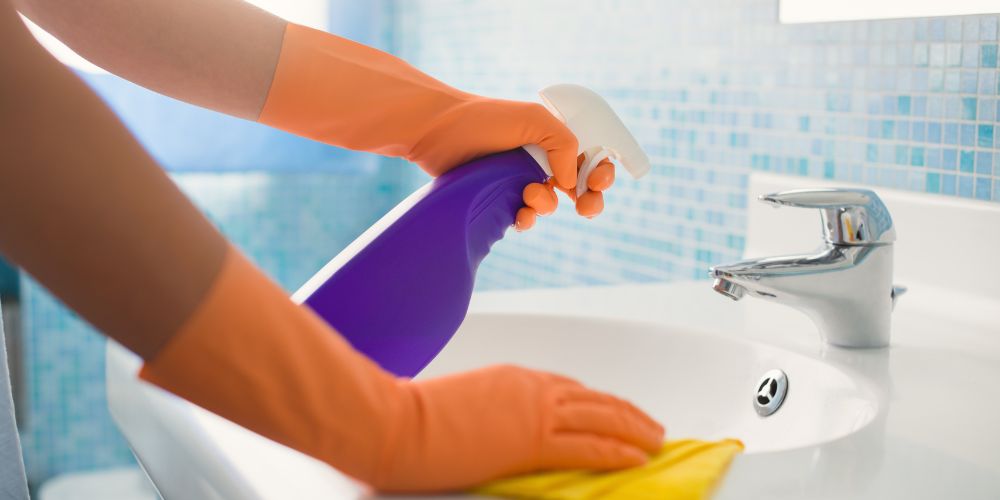
Restrooms require consistent attention because multiple people use the same fixtures throughout the day.
Routine tasks include cleaning sinks, toilets, counters, floors, and other surfaces. Appropriate disinfecting products may be needed for specified surfaces as part of the cleaning procedure.
The product, application method, and contact time should match the surface and intended use.
Breakrooms and Food-Contact Surfaces
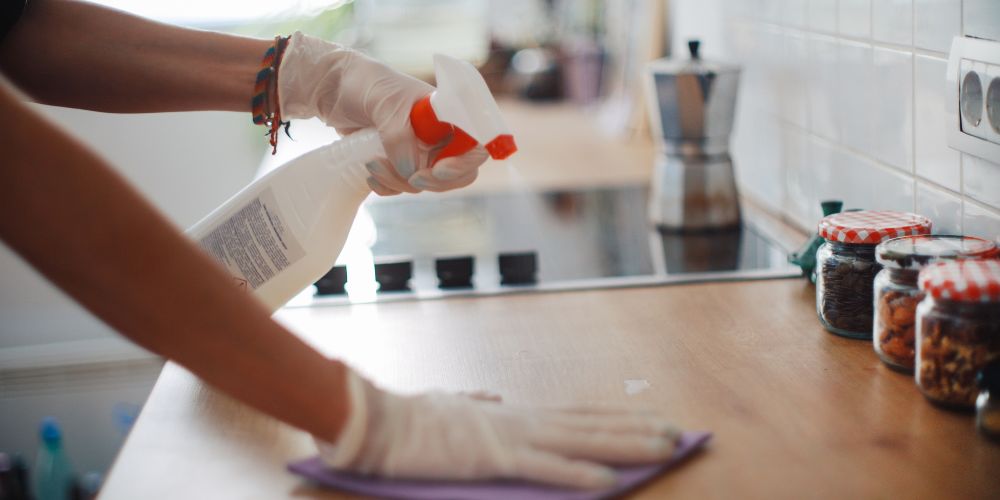
Breakrooms combine shared equipment, food preparation, and frequently handled surfaces.
Tables, counters, appliance handles, and sinks should receive routine cleaning. Where food-contact surfaces require sanitizing, businesses must follow the applicable food safety requirements and use products approved for that purpose.
A product suitable for general surface disinfection is not automatically suitable for every food-contact application.
Reception Areas and Shared Spaces
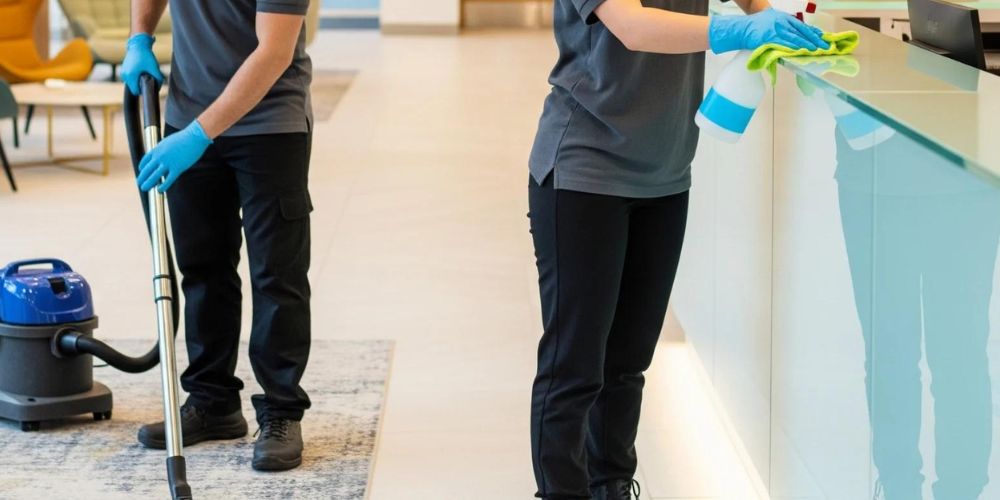
Reception desks, entryway handles, seating areas, and conference rooms experience varying levels of traffic.
Regular cleaning helps maintain the appearance of these spaces. High-touch surfaces may require more frequent attention, with additional disinfection based on the facility’s needs and relevant guidance.
Healthcare and Specialized Facilities
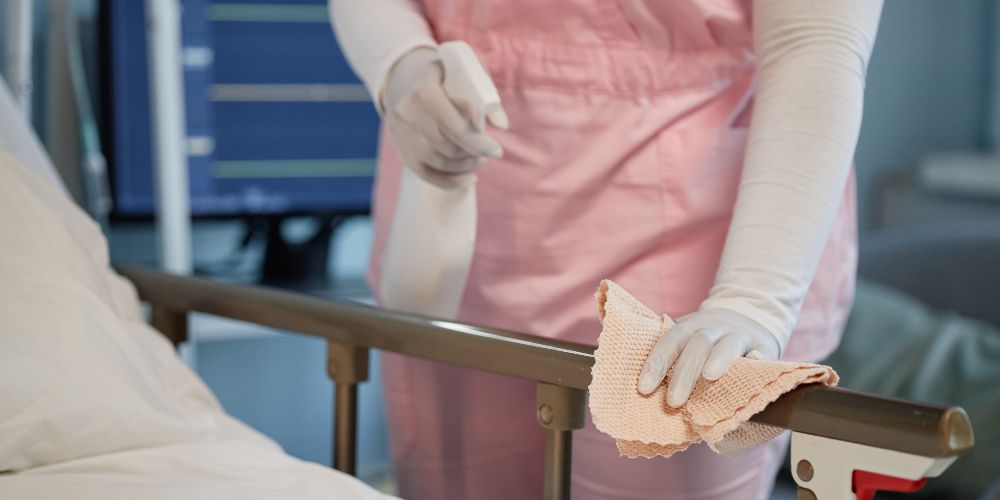
Medical offices, healthcare facilities, childcare settings, food-processing operations, and other regulated environments may have specific cleaning, sanitizing, and disinfection requirements. For a closer look at medical settings, read our medical office cleaning priorities.
General office cleaning guidance should not be substituted for those requirements. Businesses in these settings should follow the relevant regulations and facility-specific protocols.
How Often Should Your Business Clean, Sanitize, or Disinfect?
The right schedule depends on how your facility operates. A small office with limited visitors may have different requirements from a busy commercial building with multiple shifts and shared workspaces.
Rather than automatically disinfecting every surface daily, establish a schedule based on the following factors.
Traffic levels: Frequently used entrances, reception areas, and shared facilities may need more frequent cleaning.
Surface use: A shared table or door handle may need attention more often than a rarely used storage surface.
Visible soil: Surfaces should be cleaned when dirt, spills, or residue are present.
Illness-related situations: Additional disinfection may be appropriate when someone has been ill in an area or when relevant public health guidance calls for it.
Industry requirements: Healthcare, food service, and other regulated environments may require specific procedures and frequencies.
A practical plan might include routine cleaning of workspaces and common areas, more frequent attention to high-touch surfaces, and additional sanitizing or disinfecting where appropriate. To see how this works for a local schedule, read how often offices should be professionally cleaned in Idaho Falls.
These are planning principles, not a universal schedule. Your facility’s actual requirements should determine the frequency and method used.
Common Mistakes Businesses Should Avoid
Even a regular cleaning routine can fall short when the wrong products or procedures are used.
Treating All Three Methods as the Same
Cleaning, sanitizing, and disinfecting have different purposes. Choosing a method simply because a product is labeled “antibacterial” or “cleaning” may not meet the facility’s actual needs.
Disinfecting Without Cleaning First
Applying disinfectant to a visibly dirty surface can interfere with the intended result. Remove dirt and residue before using a sanitizing or disinfecting product.
Ignoring Product Contact Time
Wiping a product off too soon may prevent it from achieving the result stated on its label. Follow the specified wet contact time.
Using the Same Procedure Everywhere
A carpet, an electronic screen, a food-contact counter, and a restroom fixture do not necessarily require the same products or techniques.
Match the method to the surface, and follow any manufacturer instructions or applicable regulations.
Assuming More Chemicals Mean Better Results
Using stronger concentrations than directed or mixing products can create safety hazards. More chemical is not necessarily more effective.
Staff should understand product labels, appropriate protective equipment, ventilation requirements, and safe storage practices.
Frequently Asked Questions
Is cleaning better than sanitizing or disinfecting?
None of the three is universally better. Cleaning removes dirt and many germs, sanitizing reduces germs to an appropriate level, and disinfecting kills specified germs on surfaces. The right choice depends on the surface, its use, and the situation.
Can you disinfect a surface without cleaning it first?
Cleaning first is recommended because dirt and organic matter can interfere with a disinfectant’s effectiveness. Follow the product label for the required cleaning and application procedure.
Does sanitizing kill viruses?
Not necessarily. Sanitizing products are not automatically effective against viruses. Check the product’s registered claims and directions to determine which germs it is designed to address.
Should businesses disinfect every day?
Not every business needs to disinfect every surface daily. Routine cleaning is generally sufficient in many community settings, while additional disinfection may be appropriate in higher-traffic areas, after illness-related incidents, or when specific guidance or regulations require it.
What does “EPA-registered” mean on a disinfectant label?
It means the product is registered with the EPA for specific disinfecting claims. The label lists the germs the product is intended for, the surfaces it’s approved for, and the contact time, so read it before use.
Choose the Right Cleaning Approach for Your Business
Cleaning, sanitizing, and disinfecting each have a role in maintaining a commercial facility, but they are not interchangeable. Routine cleaning provides the foundation, sanitizing is appropriate for specific applications, and disinfecting offers additional germ control when circumstances call for it.
By considering surface use, traffic levels, facility requirements, and the correct product instructions, businesses can develop a cleaning plan that is practical, consistent, and suited to their operations.
If your business needs dependable support with routine facility maintenance, explore Moonshine Commercial Cleaning’s services or contact the team. A cleaning plan built around your facility can help you maintain professional, well-managed spaces for employees, customers, and visitors.
