

Few things make a home look cleaner and brighter than spotless windows. Clean, streak-free glass lets in more natural light, improves your view, and instantly enhances your home’s appearance. Yet many homeowners still struggle with streaks, smudges, lint, and water spots—even after spending time cleaning. Learning how to clean windows streak-free starts with using the right technique, not just the right cleaner.
The best way to clean windows without streaks is to use the right tools, a simple cleaning solution, and a proven top-to-bottom cleaning method. Removing dust before washing and drying the glass immediately also helps prevent streaks, water spots, and cloudy residue.
In this guide, you’ll discover the best way to clean windows, learn how to wash windows for a crystal-clear finish, and follow six simple steps to achieve spotless, streak-free results every time. Following a consistent window cleaning routine will not only improve visibility but also help protect your glass by preventing dirt, grime, and mineral buildup over time.
Step-by-Step Guide to Cleaning Windows Streak-Free
Following the right cleaning process is one of the best ways to clean windows without leaving streaks, smudges, or water spots. These six simple steps will help you remove dirt and grime effectively while achieving a crystal-clear, streak-free finish.
Step 1: Gather the Right Window Cleaning Supplies
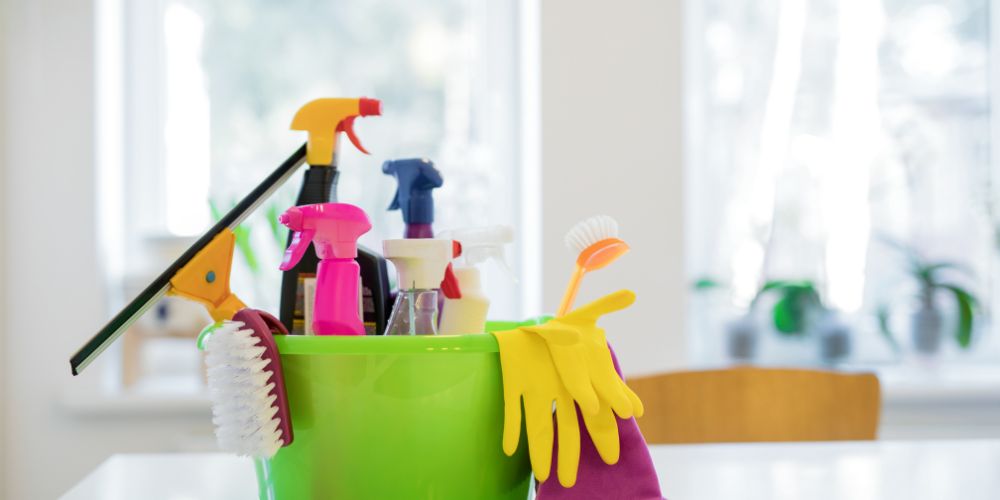
Using the right tools is the first step to achieving streak-free windows. While paper towels and old rags may seem convenient, they often leave lint behind and can spread dirt across the glass.
For the best results, gather a few essential supplies before you begin:
- Microfiber cloths
- Spray bottle
- Distilled white vinegar, a quality window cleaner, or a glass cleaning solution
- Mild dish soap
- Warm or distilled water
- Soft sponge
- Squeegee for larger windows
- Soft brush or vacuum with a brush attachment
Having everything ready before you start makes the cleaning process faster and helps ensure a spotless, streak-free finish.
Pro Tip: Always use clean microfiber cloths. Dirty cloths can transfer dust and residue back onto the glass.
Step 2: Prepare the Windows Before Cleaning
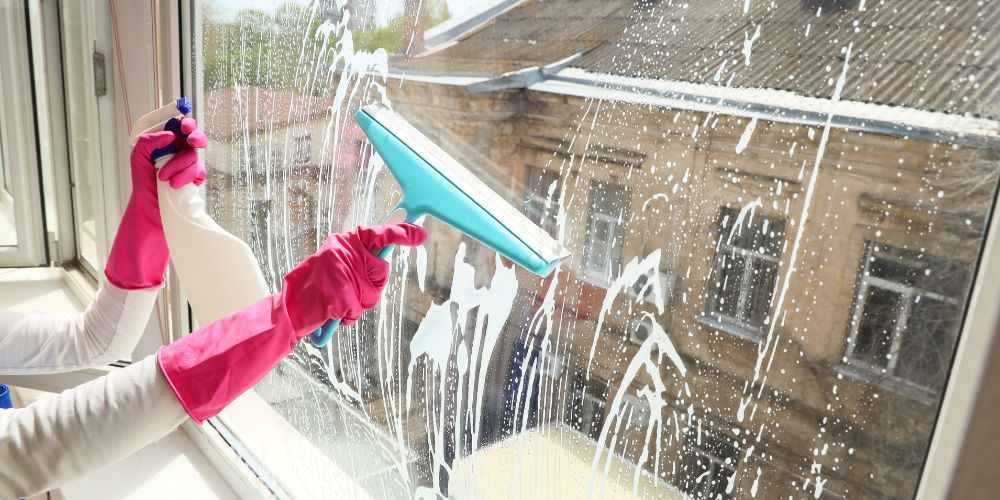
Preparing your windows properly is one of the most important steps for preventing streaks. Dust, pollen, cobwebs, and loose dirt can mix with the cleaning solution, creating smears that are difficult to remove.
Start by vacuuming or brushing the window tracks, frames, and sills to remove loose debris. Next, wipe the frames with a damp microfiber cloth to eliminate any remaining dust before cleaning the glass.
If you notice bird droppings, tree sap, or sticky residue, soften the area with a damp cloth before gently wiping it away. Avoid using razor blades or abrasive tools, as they can permanently scratch the glass.
Pro Tip: Cleaning the frames first prevents dirt from washing back onto the glass during the cleaning process.
Step 3: Wash the Glass Using the Correct Technique
Apply a light mist of your cleaning solution directly onto the glass or onto a microfiber cloth. Avoid oversaturating the surface, as too much cleaner can leave residue behind.
Starting at the top corner, wipe the glass using smooth, overlapping vertical or horizontal strokes while working your way downward. This prevents dirty water from running over areas you’ve already cleaned.
For heavily soiled windows, clean one section at a time and make a second pass before the cleaning solution dries.
Pro Tip: Avoid circular wiping motions, as they often create uneven streaks. Straight, overlapping strokes provide a cleaner and more consistent finish.
Step 4: Dry and Buff for a Streak-Free Finish
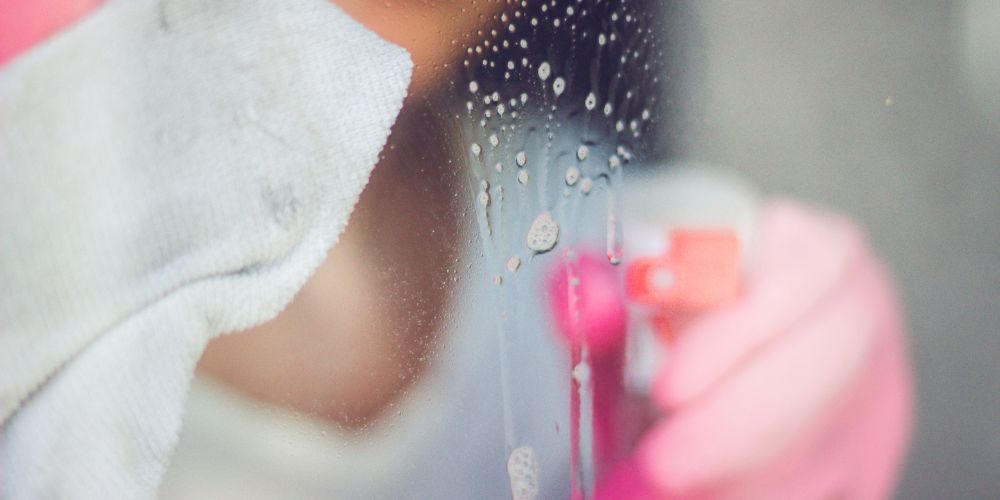
Drying the glass immediately after washing is essential for preventing streaks and water spots.
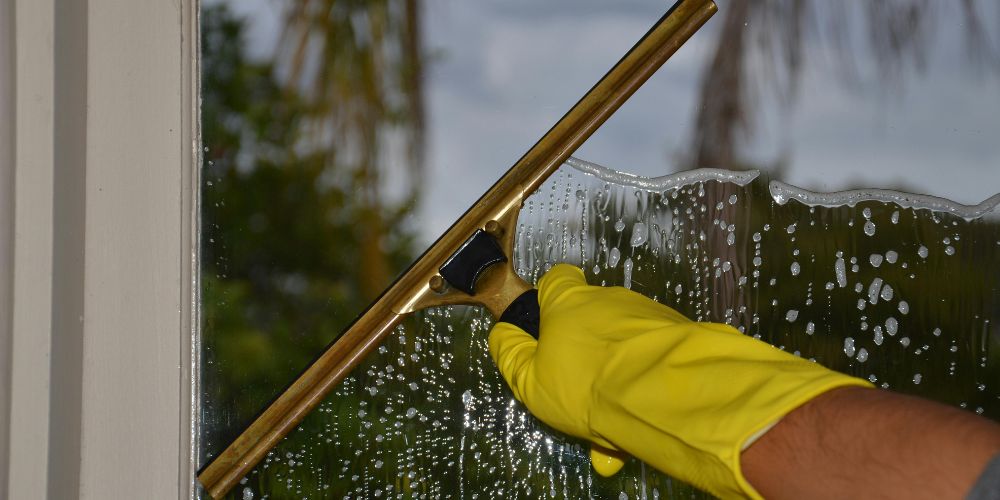
Use a clean, dry microfiber cloth to buff each section as soon as you’ve finished cleaning it. For larger windows, a quality squeegee offers even better results. Start at the top of the glass and pull the squeegee downward in smooth, even strokes, wiping the blade clean after every pass.
If small streaks remain, buff the area with a fresh microfiber cloth instead of applying more cleaner.
Pro Tip: Never let the cleaning solution air dry, as it can leave behind visible streaks and residue.
Step 5: Clean Exterior Windows, Screens, and Tracks
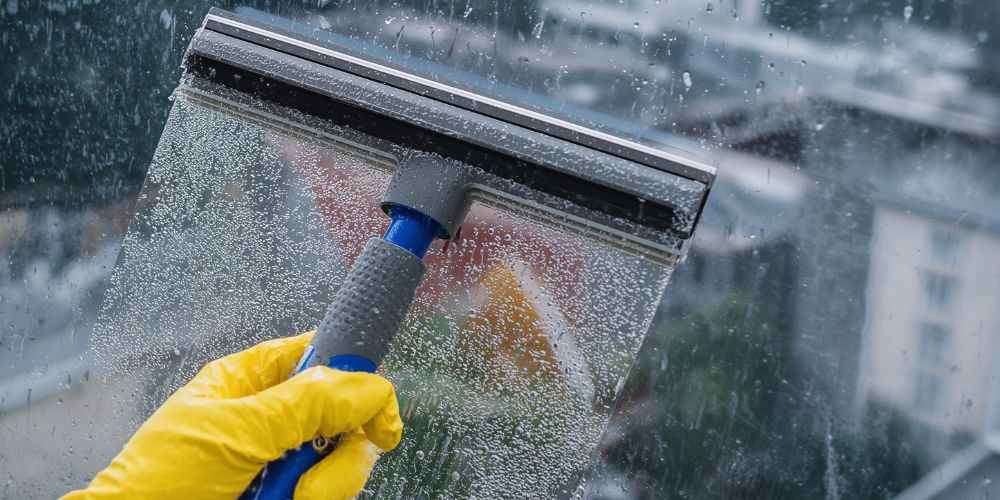
Exterior windows are exposed to dirt, pollen, rain, and environmental buildup, so they often require more attention than interior glass.
Before washing, rinse the exterior glass with clean water to remove loose grit that could scratch the surface. Then clean the window using a soft sponge and your preferred cleaning solution before removing excess water with a squeegee.
Don’t forget the finishing details. Vacuum or wash window screens with warm, soapy water, then allow them to dry completely before reinstalling them. Finally, wipe down the tracks and sills to remove any remaining dust or debris.
Pro Tip: Clean exterior windows on a cloudy day or during the early morning to prevent the cleaning solution from drying too quickly.
While these DIY techniques are ideal for routine maintenance, large commercial buildings, storefronts, and hard-to-reach windows often benefit from professional window cleaning services to safely remove stubborn buildup and maintain a crystal-clear, streak-free appearance year-round.
Step 6: Inspect the Glass and Touch Up Any Remaining Marks

Once the windows are dry, inspect them from different angles in natural light. This helps you spot any remaining streaks, fingerprints, or missed areas that may not be visible straight on.
Use a clean, dry microfiber cloth to gently buff any imperfections, paying close attention to the edges and corners where cleaning solution can collect.
A quick final inspection ensures every window has a crystal-clear, streak-free finish and gives your home a brighter, cleaner appearance.
Pro Tip: Regularly cleaning your windows every few months helps prevent heavy buildup, making future cleaning easier and more effective.
Conclusion
Knowing how to clean windows streak-free comes down to using the right tools, following the proper cleaning technique, and avoiding common mistakes. By removing dust before washing, cleaning from top to bottom, and drying the glass immediately, you can achieve crystal-clear windows without streaks, smudges, or water spots.
Regular window cleaning not only keeps your home looking brighter and more inviting but also helps protect the glass, frames, and tracks by preventing dirt and mineral buildup. If your business requires expert care for large glass surfaces or difficult-to-reach windows, Moonshine Commercial Cleaning provides professional window cleaning services to help maintain a clean, streak-free appearance year-round.
Frequently Asked Questions
How do you clean windows without streaks?
Use a microfiber cloth with a vinegar-and-water solution or a mild glass cleaner. Clean from top to bottom, avoid direct sunlight, and dry the glass immediately with a clean microfiber cloth or squeegee to prevent streaks.
What is the best thing to clean windows with?
A microfiber cloth paired with a solution of distilled water and white vinegar or warm water with a few drops of mild dish soap is one of the best ways to clean windows. It effectively removes dirt while leaving the glass clear and streak-free.
Is Dawn and vinegar good for cleaning windows?
Yes. A small amount of Dawn dish soap combined with white vinegar and water helps remove grease, fingerprints, and everyday grime. Use the solution sparingly and wipe the glass dry for the best results.
Why are my windows still streaky or smeared after cleaning?
Streaks usually occur from using too much cleaner, dirty cloths, cleaning in direct sunlight, or not drying the glass properly. Cleaning with fresh microfiber cloths and buffing the glass immediately helps eliminate smears.
Is Windex or vinegar better for cleaning windows?
Both work well. Vinegar is a natural, budget-friendly cleaner for routine maintenance, while Windex is convenient for removing everyday smudges. The cleaning technique and tools you use have a greater impact than the cleaner itself.
What do professional window cleaners use in their water?
Professional window cleaners often use purified or deionized water to prevent mineral spots and streaks. Combined with a quality squeegee and microfiber cloth, it delivers a crystal-clear finish.
Should you clean windows on a sunny day?
No. Direct sunlight causes the cleaning solution to dry too quickly, which can leave streaks behind. For the best results, clean windows on a cloudy day or during the early morning or evening.
What are the most common mistakes when cleaning windows?
Common mistakes include using paper towels, applying too much cleaner, skipping dust removal, cleaning in direct sunlight, and letting the cleaner air dry. Using the right tools and technique helps achieve streak-free windows every time.
