
A medical office needs more than a clean appearance. Patients, staff, and visitors move through the facility every day, using shared spaces and touching many of the same surfaces.
That makes a consistent medical office cleaning routine important for maintaining a professional, comfortable, and well-maintained environment. However, not every area needs the same level of attention. Spaces with high foot traffic, frequent surface contact, or regular use should be prioritized.
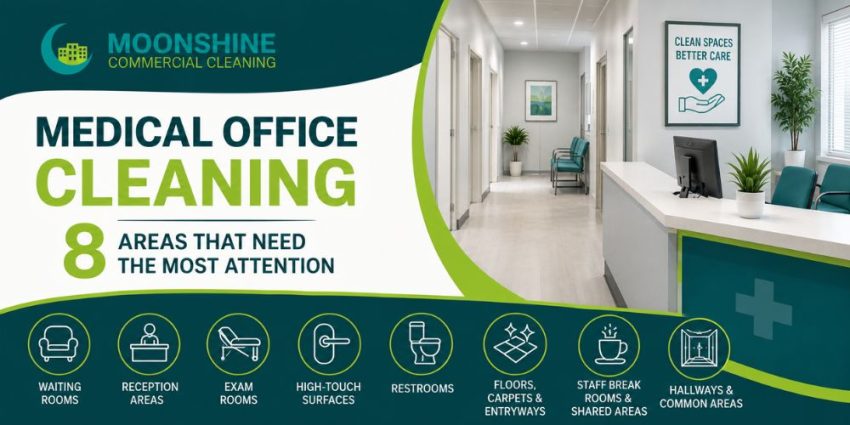
Here are eight areas that deserve the most attention when cleaning a medical office.
8 Areas That Need the Most Attention in a Medical Office
The eight areas that need the most attention during medical office cleaning are waiting rooms, reception areas, exam rooms, high-touch surfaces, restrooms, floors and entryways, staff break rooms, and hallways. These areas experience the highest levels of foot traffic, frequent contact, and daily use, making regular cleaning essential for maintaining a clean, professional, and well-maintained healthcare environment.
1. Waiting Rooms and Patient Seating Areas
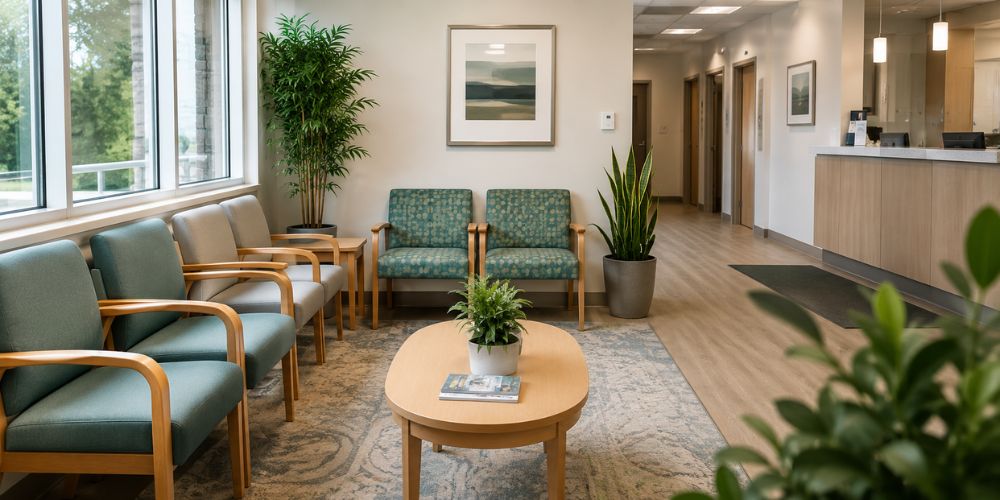
The waiting room is often the first area patients see, making cleanliness an important part of the overall appearance of the facility.
It is also a shared space where patients and visitors may sit throughout the day.
Cleaning should focus on:
- Patient chairs and seating surfaces
- Chair arms and side tables
- Door handles and push plates
- Countertops
- Floors and carpets
- Waste bins
- Visible dust and debris
Entryways should also receive attention because dirt and moisture can easily be tracked into waiting areas.
Regular cleaning helps keep this high-traffic space welcoming and well maintained.
2. Reception and Check-In Areas
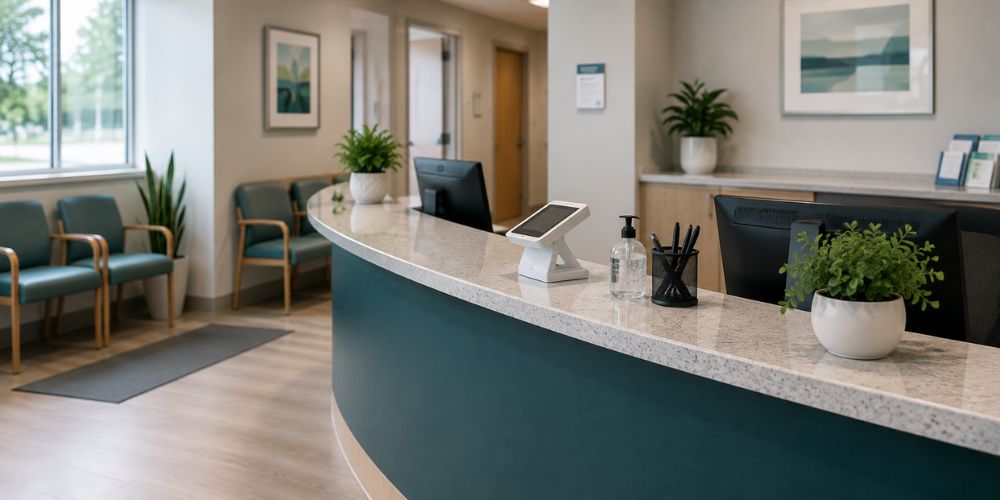
Reception areas experience frequent activity. Patients may check in, complete paperwork, make payments, or interact with staff and shared devices.
Important cleaning points include:
- Reception counters
- Countertops
- Door handles
- Chairs
- Payment terminals
- Shared touchscreens
- Frequently used shared items
- Floors around the reception desk
Electronic equipment should be cleaned according to the manufacturer’s instructions and the medical practice’s procedures.
Because reception is one of the first areas patients see, keeping it clean and organized can help create a professional first impression.
3. Exam and Treatment Rooms
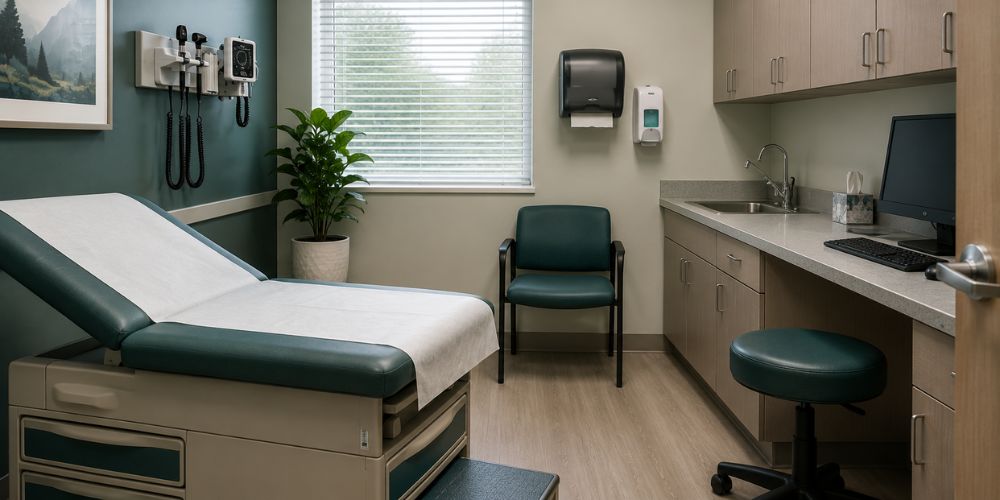
Exam and treatment rooms require careful attention because different patients may use the same space throughout the day.
Cleaning requirements can vary depending on the type of medical practice, procedures performed, and facility-specific protocols.
Routine environmental cleaning may include:
- Exam tables and chairs
- Countertops and work surfaces
- Door handles
- Light switches
- Floors
- Sinks and surrounding surfaces
- Other identified high-touch surfaces
CDC guidance on environmental cleaning in healthcare facilities recommends adapting environmental cleaning procedures to the type of healthcare area, surfaces, and activities involved.
It is important to distinguish routine commercial cleaning from specialized clinical responsibilities. Tasks such as instrument sterilization, sharps handling, and regulated medical-waste procedures may require specialized personnel and processes.
4. High-Touch Surfaces
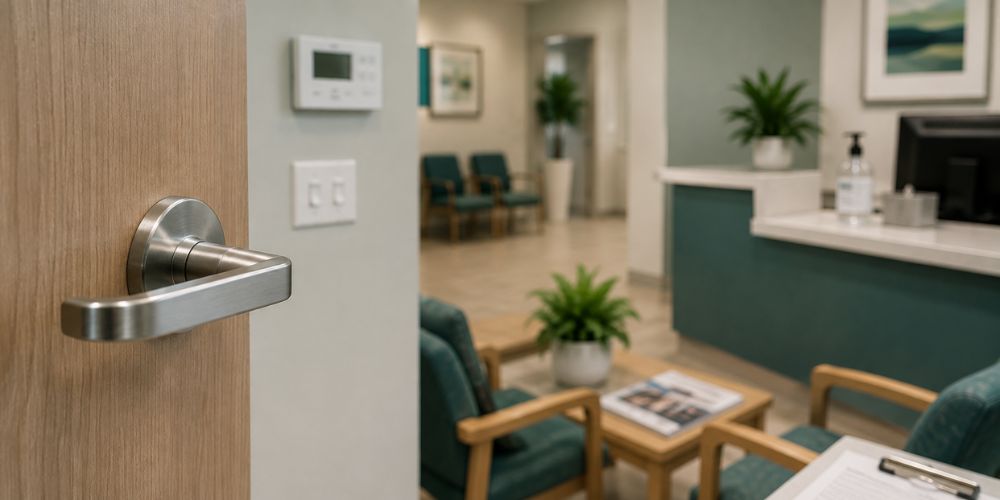
Some of the most important cleaning areas are not necessarily the largest or most visible.
Door handles, light switches, handrails, faucet handles, counters, and chair arms can receive repeated contact throughout the day.
Common high-touch surfaces include:
- Door handles and push plates
- Light switches
- Handrails
- Countertops
- Chair arms
- Faucet handles
- Shared touchscreens
- Frequently touched equipment exteriors
Including these surfaces in a regular cleaning routine helps prevent them from being overlooked. For more examples, see our guide to high-touch areas in the office that require frequent cleaning.
5. Restrooms
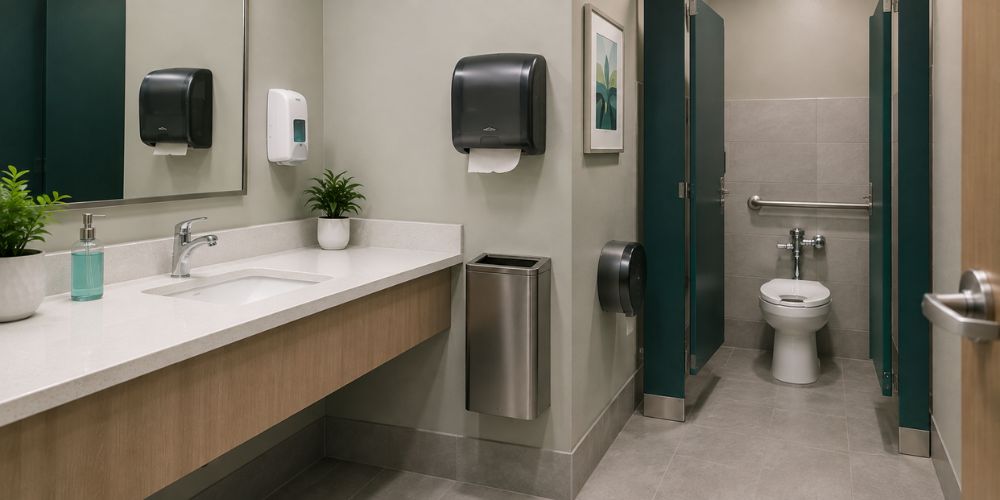
Restrooms are regularly used by patients, visitors, and staff, so they need consistent attention.
Cleaning should cover:
- Toilets and surrounding surfaces
- Sinks and faucets
- Countertops
- Mirrors
- Door handles
- Dispensers
- Floors
- Waste bins
Depending on the service agreement, cleaning staff may also check and replenish soap, toilet paper, paper towels, and other supplies.
Small details such as water spots, buildup around fixtures, or overflowing waste bins can quickly affect the appearance of the entire facility.
6. Floors, Carpets, and Entryways
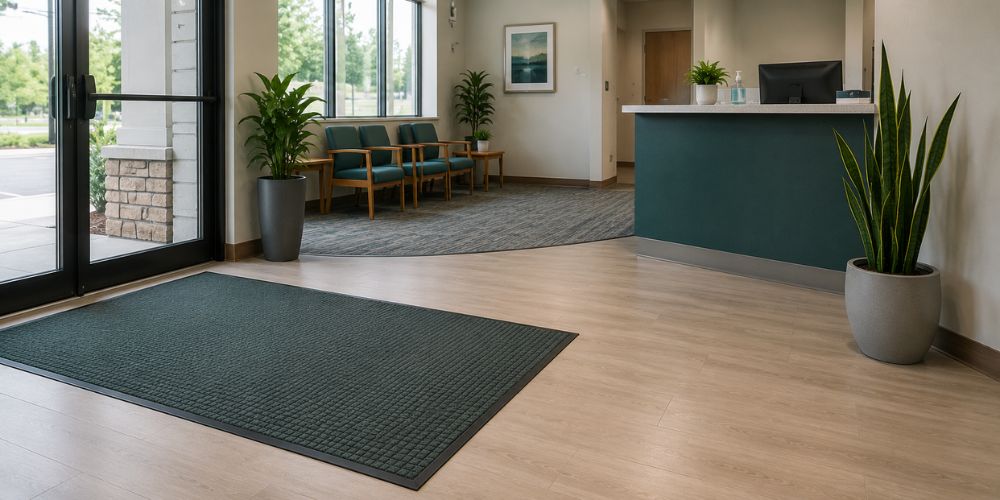
Floors experience significant foot traffic throughout a medical office. Dirt, dust, moisture, and debris can be tracked in from sidewalks, parking areas, and outdoor entrances.
Depending on the flooring type, routine floor care may include:
- Vacuuming carpets
- Mopping hard floors
- Removing visible debris
- Spot cleaning
- Cleaning around entrances
- Addressing spills promptly
- Periodic deeper floor or carpet cleaning
Entryways may require additional attention during rainy or snowy weather, when moisture and outdoor debris can be tracked inside more easily.
A consistent floor cleaning routine helps maintain the appearance and condition of the medical office. Regular care can also help prevent dirt and debris from building up in high-traffic areas.
7. Staff Break Rooms and Shared Areas
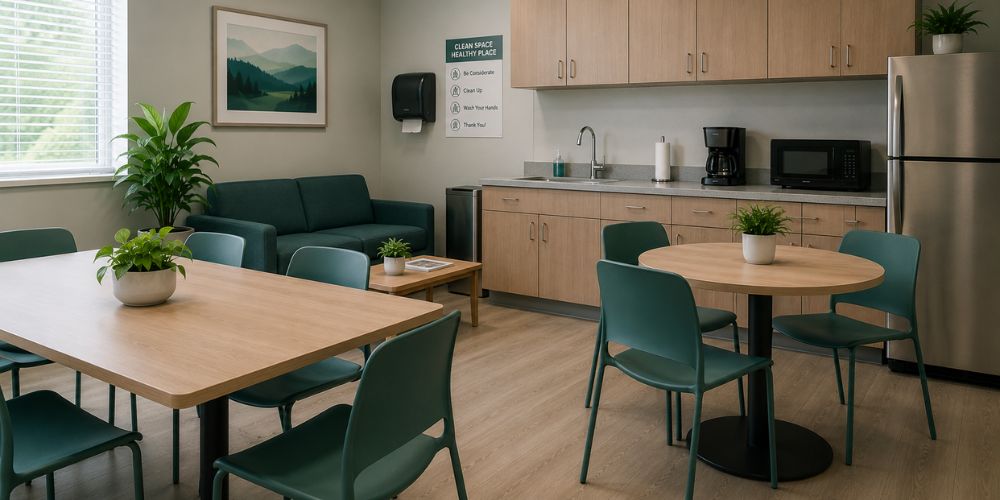
Patient-facing spaces naturally receive a lot of attention, but staff areas should not be overlooked.
Break rooms can accumulate food debris, spills, dust, and waste during the workday.
Regular cleaning may include:
- Tables and countertops
- Sinks
- Appliance exteriors
- Cabinet surfaces
- Floors
- Door handles
- Waste bins
Keeping employee spaces clean helps maintain a consistent standard throughout the facility rather than focusing only on areas patients see.
8. Hallways and Common Areas

Hallways connect different parts of a medical office and can experience constant foot traffic.
Although they may seem less important than exam rooms or reception areas, hallways can receive constant foot traffic and are easy to overlook during routine cleaning.
Cleaning attention should include:
- Hallway floors
- Door frames
- Handrails
- Baseboards
- Light switches
- Corners and edges
- Other frequently touched surfaces
Paying attention to these less-visible areas helps maintain a consistent appearance throughout the office.
Why These Areas Need the Most Attention
The eight areas above have several things in common: they are frequently used, frequently touched, highly visible, or exposed to heavy foot traffic. That means medical office cleaning should not follow exactly the same approach for every part of a facility.
For example, a busy reception area may need more frequent attention than a low-traffic administrative room. An entrance may need additional floor care during bad weather, while an exam or treatment room may have different cleaning requirements based on how it is used.
The best approach is to prioritize cleaning based on the actual needs, traffic, and workflow of the medical office.
How to Maintain a Consistent Medical Office Cleaning Routine
A practical cleaning plan should consider:
- Patient and visitor traffic
- Number of employees
- Facility size and layout
- Types of rooms and services provided
- Frequency of room use
- Restroom usage
- Flooring types
- Facility-specific cleaning procedures
The medical practice should also clearly define the responsibilities of its cleaning provider. A janitorial cleaning checklist can help organize routine tasks and clarify what falls within the cleaning provider’s responsibilities.
When expectations and responsibilities are clearly established, cleaning teams can focus their efforts on the areas that need them most.
Frequently Asked Questions for Medical Office Cleaning
What is included in medical office cleaning?
Medical office cleaning typically includes waiting rooms, reception areas, exam rooms, restrooms, floors, hallways, break rooms, and high-touch surfaces. Services are customized based on the facility’s size, patient traffic, and cleaning requirements.
How often should a medical office be cleaned?
Most medical offices require daily cleaning, while high-touch surfaces and patient-care areas may need more frequent attention. The ideal schedule depends on patient volume, facility size, and the services provided.
Which areas need the most attention during medical office cleaning?
Waiting rooms, reception areas, exam rooms, restrooms, floors, and high-touch surfaces should be cleaned most often because they experience the highest levels of foot traffic and daily contact.
What is the difference between medical office cleaning and regular office cleaning?
Medical office cleaning focuses on healthcare environments by prioritizing patient areas, high-touch surfaces, and facility-specific cleaning procedures. Regular office cleaning typically follows standard janitorial routines for commercial workplaces.
Why are high-touch surfaces important in medical office cleaning?
High-touch surfaces such as door handles, light switches, countertops, chair arms, and shared touchscreens receive frequent contact throughout the day. Regular cleaning helps keep these commonly used areas clean and well maintained.
What should you look for in a medical office cleaning service?
Choose a provider with healthcare cleaning experience, trained staff, flexible scheduling, and customized cleaning plans. A reliable company should understand the cleaning needs of medical offices and provide consistent, dependable service.
Final Thoughts
A well-maintained medical office starts with consistent attention to the areas that see the most traffic, contact, and daily use. From waiting rooms and reception areas to exam rooms, restrooms, floors, and high-touch surfaces, each area contributes to the overall condition of the facility.
The most effective medical office cleaning routine is one that fits the facility—not a one-size-fits-all approach. By prioritizing high-use areas and following a cleaning plan based on the office’s layout, traffic, and specific needs, medical practices can maintain a cleaner, more professional environment for patients and staff.
If your medical office in Idaho Falls needs dependable cleaning support, Moonshine Commercial Cleaning can create a cleaning plan tailored to your facility and schedule. Contact our team to discuss your cleaning needs and find a service plan that works for your business.
