
No matter how often you mop or wipe your tiles, dirty grout lines can make your floors and walls look like they haven’t been cleaned in weeks. Because grout is naturally porous, it absorbs dirt, grease, soap scum, moisture, and everyday spills much more easily than tile, causing stains and discoloration over time.
The best way to clean grout lines is to start with the gentlest cleaning method. For light dirt, warm water and dish soap are often enough. For tougher stains, a baking soda and hydrogen peroxide paste works well, while oxygen bleach or steam cleaning can tackle deep-set grime and mildew without damaging the grout.
The good news is that restoring dirty grout doesn’t have to involve harsh chemicals or hours of scrubbing. With the right cleaning method and regular maintenance, you can brighten grout lines, remove stubborn stains, and keep your tiled floors and walls looking clean for longer.
In this guide, you’ll learn how to clean grout lines using five proven DIY methods, discover which cleaners to avoid, understand why grout gets dirty so quickly, and find simple tips to keep your tile grout looking its best.
Why Does Grout Get So Dirty Anyway?
To defeat the grime, you need to understand what you are up against. Grout is essentially a mixture of sand and cement. This composition means it has microscopic pores that readily absorb liquids and trap microscopic debris.
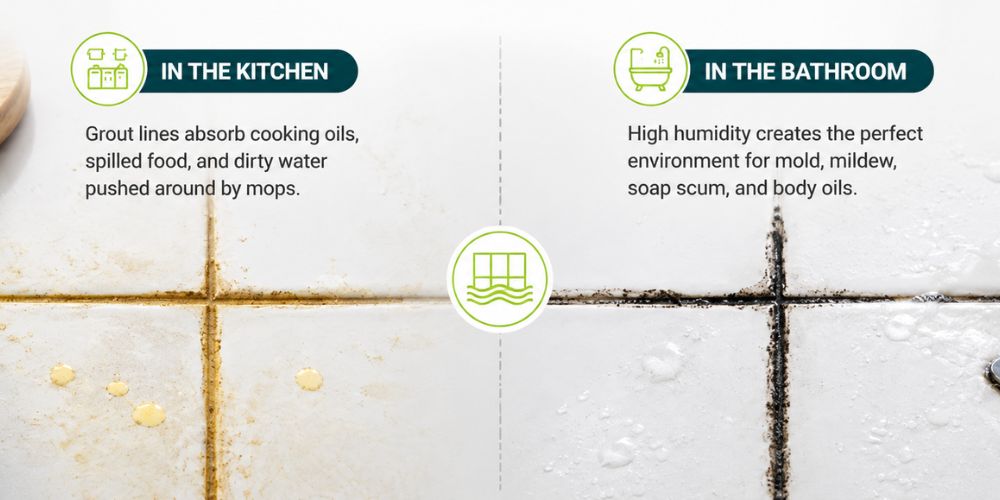
- In the Kitchen: Grout lines absorb cooking oils, spilled food, and dirty water pushed around by standard mops.
- In the Bathroom: High humidity creates a breeding ground for mold, mildew, and a sticky buildup of soap scum and body oils.
Step-by-Step Grout Cleaning Methods
Method 1: Warm Water and Dish Soap (Best for Routine Cleaning)
If your grout has light dirt, dust, or grease buildup, start with the gentlest cleaning method. Regular cleaning with warm water and dish soap helps prevent grime from building up and keeps grout looking fresh without causing damage.
What You’ll Need
- 2 cups warm water
- 1 teaspoon liquid dish soap
- Soft grout brush or old toothbrush
- Microfiber cloth
Steps
- Mix the dish soap into warm water.
- Dip the brush into the solution and gently scrub the grout lines using circular motions.
- Let the solution sit for 3–5 minutes.
- Wipe away the loosened dirt with a damp microfiber cloth.
- Dry the area with a clean towel.
Best For: Weekly maintenance and lightly soiled grout.
Pro Tip: Clean grout regularly to prevent stubborn stains from developing.
Method 2: Baking Soda and Hydrogen Peroxide Paste (Best Overall DIY Method)
This homemade grout cleaner is highly effective for removing everyday stains, grease, and soap scum. Baking soda gently scrubs the grout, while hydrogen peroxide helps lift stains and brighten discolored grout without harsh chemicals.
What You’ll Need
- 2 parts baking soda
- 1 part hydrogen peroxide
- A few drops of liquid dish soap
- Grout brush or old toothbrush
- Microfiber cloth
Steps
- Mix the baking soda, hydrogen peroxide, and dish soap into a thick paste.
- Apply the paste generously over the grout lines.
- Leave it for 10–15 minutes to loosen dirt and stains.
- Scrub gently using a grout brush.
- Wipe away the residue with a damp microfiber cloth and rinse with clean water.
- Dry the surface thoroughly.
Best For: Bathroom grout, kitchen grout, and moderate stains.
Pro Tip: If stains remain, repeat the process instead of scrubbing harder to avoid damaging the grout.
Method 3: Powdered Oxygen Bleach (Best for Deep Stains and Mildew)
For heavily stained or discolored grout, oxygen bleach provides a deeper clean than most DIY solutions. It penetrates porous grout to break down dirt, mildew, and organic stains without the harsh fumes associated with chlorine bleach.
What You’ll Need
- 2 tablespoons powdered oxygen bleach
- 2 cups warm water
- Grout brush
- Microfiber cloth or mop
Steps
- Dissolve the oxygen bleach completely in warm water.
- Pour or apply the solution directly onto the grout lines.
- Allow it to soak for 15–20 minutes.
- Scrub the grout gently with a brush.
- Rinse thoroughly with clean water and dry the area.
Best For: Deep stains, mildew, and high-traffic tile floors.
Pro Tip: Always follow the manufacturer’s instructions and test the solution on a small hidden area first.
Method 4: Steam Cleaning (Best Chemical-Free Option)
A steam cleaner uses high-temperature steam to loosen dirt, remove grease, and sanitize grout without using chemical cleaners. It’s an excellent option for households with children, pets, or anyone sensitive to cleaning products.
What You’ll Need
- Steam cleaner with a grout brush attachment
- Microfiber cloth
Steps
- Fill the steam cleaner according to the manufacturer’s instructions.
- Attach the grout brush nozzle.
- Slowly move the steam nozzle along each grout line.
- Wipe away loosened dirt immediately with a microfiber cloth.
- Repeat if necessary for stubborn areas.
Best For: Chemical-free cleaning, bathrooms, and regular grout maintenance.
Pro Tip: Steam works best when used regularly before heavy stains have time to develop.
Method 5: Tile and Grout Cleaner (Best for Severely Dirty Grout)
If DIY methods don’t remove years of built-up dirt, stubborn discoloration, or deeply embedded grime, a tile and grout cleaner can provide stronger cleaning power. However, when grout remains heavily stained even after multiple cleaning attempts, professional tile and grout cleaning may be the most effective solution because it uses specialized equipment and cleaning techniques to restore grout without unnecessary damage.
What You’ll Need
- Tile and grout cleaner
- Grout brush
- Microfiber cloth or mop
- Gloves (if recommended)
Steps
- Apply the cleaner directly to the grout lines.
- Let it sit for the recommended time on the product label.
- Scrub the grout gently with a grout brush.
- Rinse thoroughly with clean water.
- Dry the surface completely.
Best For: Heavy staining, grease buildup, and grout that hasn’t been cleaned in a long time.
Pro Tip: Avoid using harsh acidic cleaners or chlorine bleach regularly, as repeated use can weaken cement-based grout and damage some types of tile.
The Grout Cleaning Hierarchy: From Mild to Heavy-Duty
Before you reach for the harshest chemicals, it is best to practice the “Cleaning Hierarchy.” Always start with the gentlest method to protect your tile and grout integrity, moving up to stronger solutions only if the stains refuse to budge.
| Method Level | Best For | Key Ingredients | Difficulty |
| Level 1: Mild DIY | Light dirt & routine cleaning | Dish soap, Warm water | Very Easy |
| Level 2: Deep DIY | Tough stains & grease | Hydrogen peroxide, Baking soda | Medium |
| Level 3: Commercial | Mold, mildew & severe discoloration | Oxygen bleach powder | Medium |
| Level 4: Maximum Power | Years of neglected grime & bacteria | Steam cleaner | Advanced |
How to Keep Your Grout Clean for Months (Pro Prevention Tips)
Cleaning your grout takes effort, so you want to ensure it stays clean for as long as possible. Implement these simple habits to keep dirt from returning:
- Seal Your Grout Regularly: Grout sealer is your absolute best line of defense. It fills many of the grout’s microscopic pores, helping reduce moisture absorption and making the grout more resistant to stains and everyday dirt. Apply a high-quality grout sealer once every year.
- Ditch the Dirty Mop: Traditional string mops simply redistribute dirty water into the lowest points of your floor—the grout lines. Switch to a microfiber flat mop or a spray mop that picks up the dirty water instead of pushing it around.
- Run the Fan: Always run your bathroom exhaust fan during showers and for 20 minutes afterward to drop the humidity levels and prevent mold from taking root.
Summary
Cleaning grout lines doesn’t have to be difficult. Start with the gentlest cleaning method, allow the cleaner enough time to loosen dirt, and scrub gently for the best results. Regular maintenance and annual grout sealing will help keep your tile looking clean and bright for longer. By letting solutions like baking soda and hydrogen peroxide sit for 15 minutes before scrubbing, you let science do the work for you. Start with the gentlest DIY methods today, get those lines looking brand new, and remember to apply a coat of sealer to lock in that pristine look for the coming year!
Start with the gentlest DIY methods today, get those lines looking brand new, and remember to apply a coat of sealer to lock in that pristine look for the coming year! However, if your tile surfaces require a deeper, more comprehensive restoration than standard DIY methods can provide, reaching out to a professional care team like Moonshine Commercial Cleaning is the easiest way to bring the shine back to your floors without the hassle.
Frequently Asked Questions About Grout Cleaning
What is the best way to clean dirty grout lines?
The best way to clean dirty grout lines is with a paste of baking soda, hydrogen peroxide, and a few drops of dish soap. Let it sit for 10–15 minutes, scrub gently with a grout brush, and rinse with clean water. For stubborn stains, use an oxygen bleach solution or a steam cleaner.
Will vinegar and water damage grout?
Yes, repeated use of vinegar can damage cement-based grout because its acidity gradually wears away the surface. It can also damage natural stone tiles like marble and limestone. Use baking soda, hydrogen peroxide, or a pH-neutral grout cleaner instead.
What should you not clean grout with?
Avoid using vinegar, lemon juice, and other acidic cleaners on cement-based grout, as they can weaken and erode the grout over time. Also, avoid metal brushes that may scratch tiles, and never mix bleach with ammonia or acidic cleaners.
What is the best homemade cleaner for grout?
A paste made with 2 parts baking soda, 1 part hydrogen peroxide, and a few drops of liquid dish soap is one of the best homemade grout cleaners. It helps lift dirt, remove stains, and brighten grout without harsh chemicals.
How often should you clean grout lines?
For best results, clean grout lines every 2–4 weeks as part of your regular cleaning routine. In high-moisture areas like bathrooms, more frequent cleaning helps prevent mold, mildew, and soap scum buildup.
Can baking soda whiten grout?
Yes, baking soda can help brighten and whiten grout by lifting dirt and stains. When combined with hydrogen peroxide, it becomes even more effective at removing discoloration and restoring the grout’s appearance.
How do you keep grout clean for longer?
To keep grout clean, seal it once a year, wipe up spills promptly, use a microfiber mop instead of a traditional string mop, and run the bathroom exhaust fan after showers to reduce moisture and prevent mold growth.
